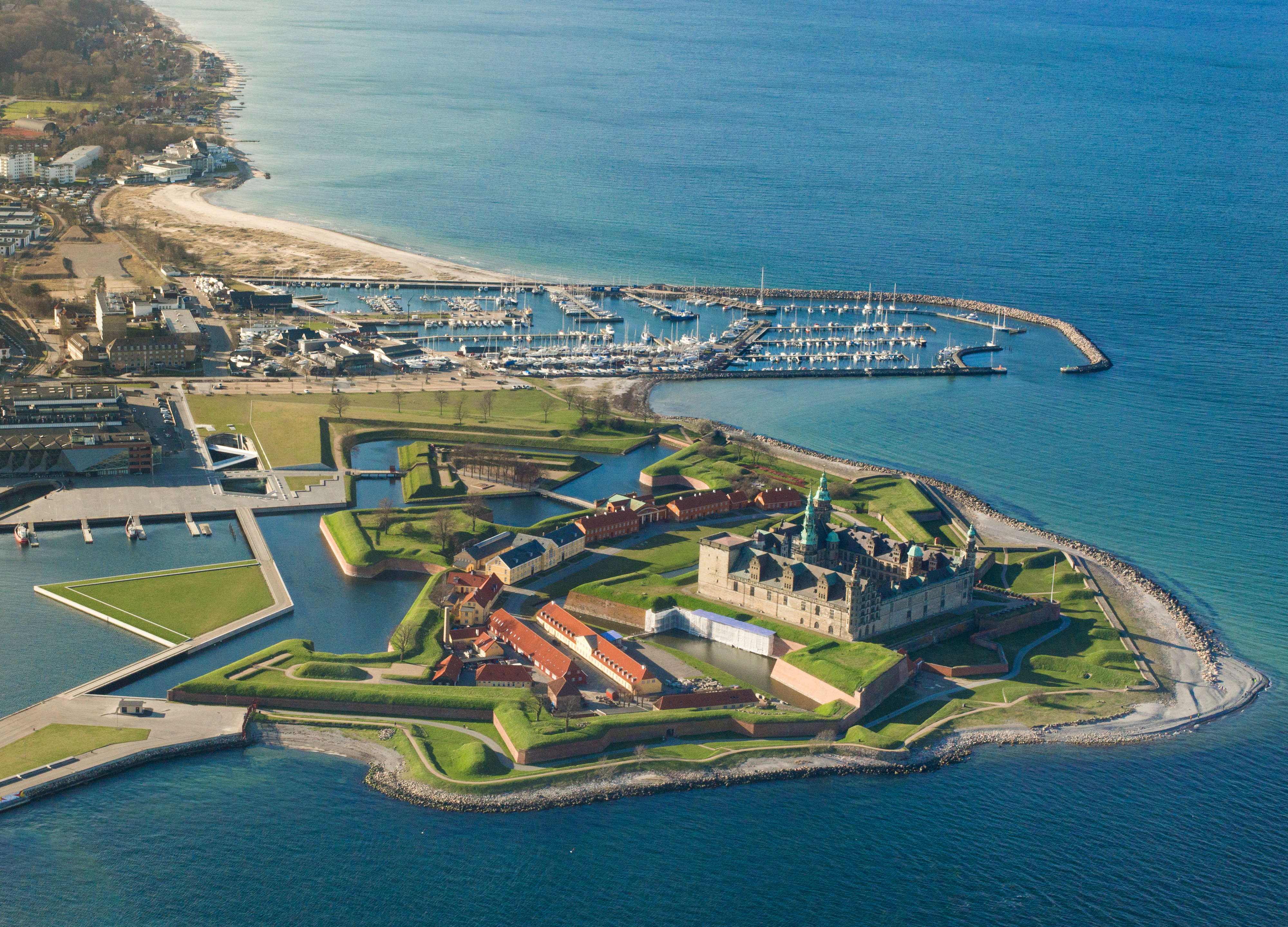
Denmark is a country made up of the peninsular of Jutland and hundreds of islands. The capital, Copenhagen, is located on the island of Sealand, at an important focal point of trade and sea routes. Over the centuries, the city has attracted people from all over the country - people who have been drawn by the opportunities and wealth, in all senses, which they have perceived to be available. The countryside north of Copenhagen has traditionally been the Copenhagener's playground, particularly for Royalty who has dotted the area with castles and palaces. Leave Copenhagen and drive north along the coastal road, passing through a number of fashionable and exclusive residential areas where you will pass Hvidøre Palace, once a noble residence and now it serves as a conference center for Novo Nordisk Pharmaceutical, before driving through the outskirts of the Deer Park. Having passed through a number of small villages and popular resorts, you arrive in Helsingør, where an outside visit is paid to Kronborg Castle. Built in the late 16th century by King Frederik II, Kronborg has achieved worldwide fame as the setting for the dramatic masterpiece by William Shakespeare, ''Hamlet - Prince of Denmark''. After Kronborg, you will walk to The Culture Yard, an old shipyard now transformed to a culture center with concert spaces, theatre stages and a library. Here you will enjoy a traditional Danish meal of open-faced sandwiches. After/before dinner you will see Fredensborg Palace: built on the initiative of King Frederik IV, the palace has an Italianate architecture and is the spring and autumn residence of the Danish Royal Family. Continue a short way to Hillerød, where a visit is paid to Frederiksborg Castle. One of the finest examples of Renaissance architecture in northern Europe, Frederiksborg Castle was built by order of King Christian IV and now houses the Museum of National History, a collection of priceless Danish paintings, porcelain, silverware, tapestries and furniture. The tour returns to Copenhagen, passing through small rural communities and agricultural and forested countryside, arriving back at the pier.