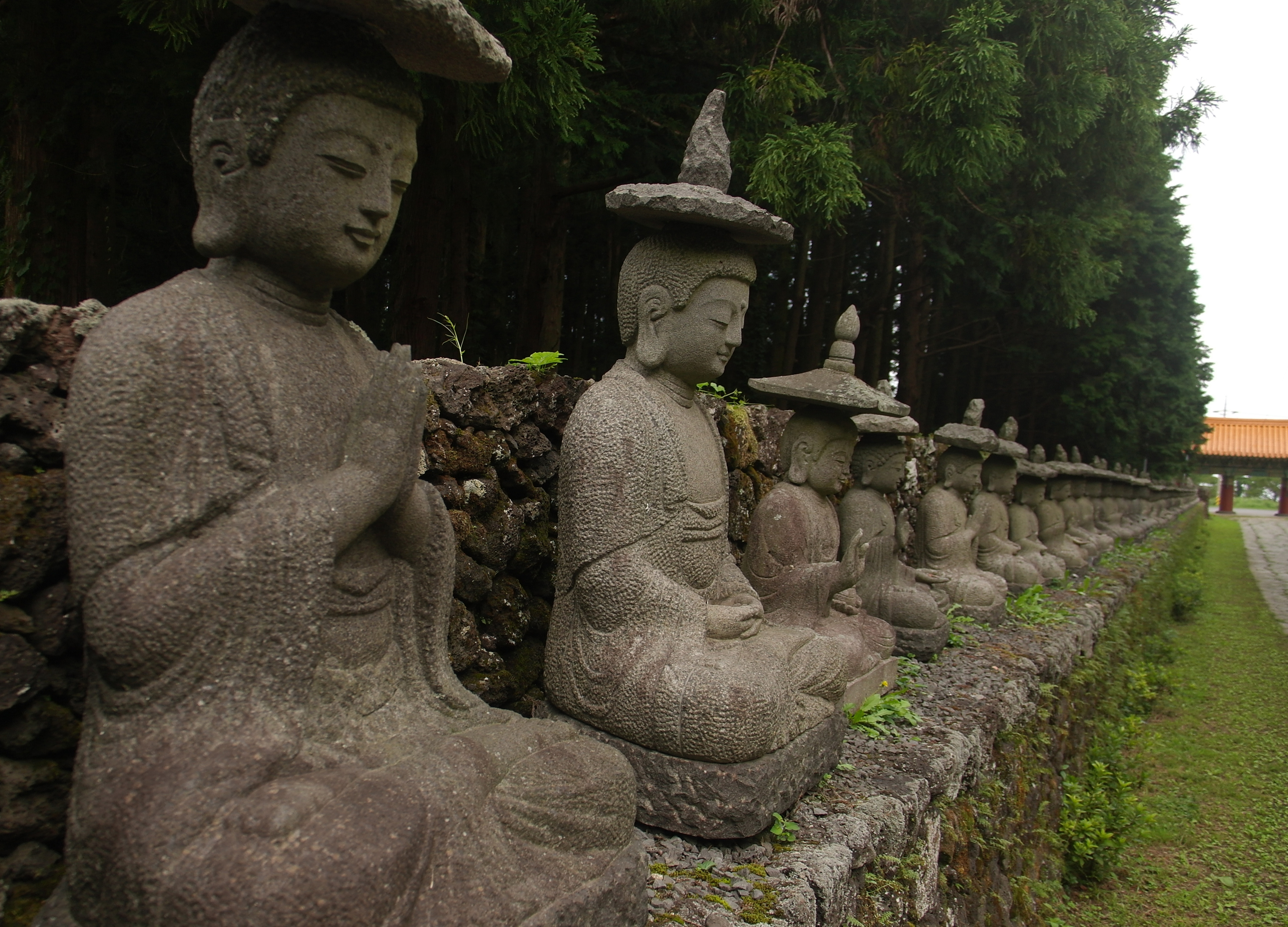
Journey to the Gwaneumsa Temple, a spacious site that contains many sacred Buddhist images and shrines. While no one knows exactly, many believe the temple was first built during the reign of the Tamra Dynasty, which held sway from 476 BC to 1005 AD. The first religious buildings and icons were destroyed when Confucianism was declared the national religion of Korea, but rebuilt in 1912 and renovated in 1964. The temple consists of the main shrine, Myeongbujeong Hall, a bell tower, Sanshingak Pavilion, and Bulimun Gate. Next it's off to The Jeju Mok Office, a cluster of low pagoda-like buildings that probably were government offices. The original buildings were destroyed during the years Japan occupied Korea (1910-1945) but the site was excavated in the 1990s and many ancient artifacts uncovered. The structures were faithfully reconstructed using historic documents and now approximate the buildings as they appeared centuries ago. Relatively new is the next stop on the tour, Jeju Dongmun Traditional Market, which has its roots in 1945. This large and vibrant market is a source for fresh produce and authentic Korean street food.